We have had the pleasure of studying wildcrafting with the following artists. Click on images to see more about each artist. |
August 2022
|
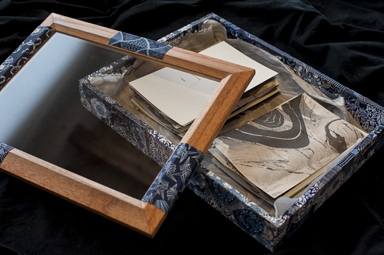
As a printmaker, most of the pieces I make derive from some kind of book structure. The structure of a book is simple and its function is intuitive. While books are generally static objects, they are built to be in motion. The spine of a book demonstrates just the right amount of flexibility to allow access. The book form is a vehicle for information, information that was important enough to mechanize and disseminate. Printmaking for me has always been about a mechanism. |
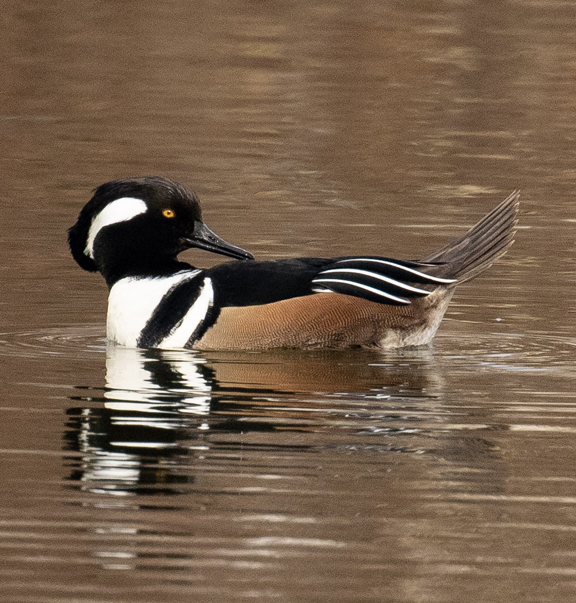
Liz Guertin, Columbia, MD My mission in life is to connect people to the outdoors. To foster that connection so that we may protect wild places. It's been the defining purpose in my work as an outdoor leader, teacher, activist, and now, as an artist. While I'm new to art, I am not new to the inspiration, or to the daily pursuit of wild experiences. With respect to photography, I've spent the last year on a serious, daily effort to photograph birds in their natural surroundings. Learning about light, bird behavior, songs, calls, aperture, shutter speed, and my own personal vision has given me a new perspective on the natural world. And now, as my work turns more abstract, I’m focused on capturing the essence of birds and their habitat -- to present something others want to experience. My work is at its best when it contains a mix of the literal, the mysterious, and my wonder, all at the same time. Building this project over the last year has been a life-force for me and my community. Through such a difficult time, we can find connection in the beauty of the wild things in our own backyards. I can't bring the people to wild places, so I bring the wild places to the people. |
Isabel Winson-Sagan, |
Alyssa Roggow, Great Falls, Montana When I was three, migrating monarchs came to rest on the linden tree in my parents’ backyard, and for a single magical afternoon the tree shimmered, a black-and-orange kaleidoscope of butterflies. I spent the rest of my childhood waiting for them to return. |
Jeff Mann, Montreal, Canada Working across drawing, animation, video, textiles, and ceramics, Jeff Mann’s work engages with notions and feelings of sensuality, movement, and abstraction - seeking to convey that which is beyond purely immanent experience and understanding. Inspired by various historical sources of |
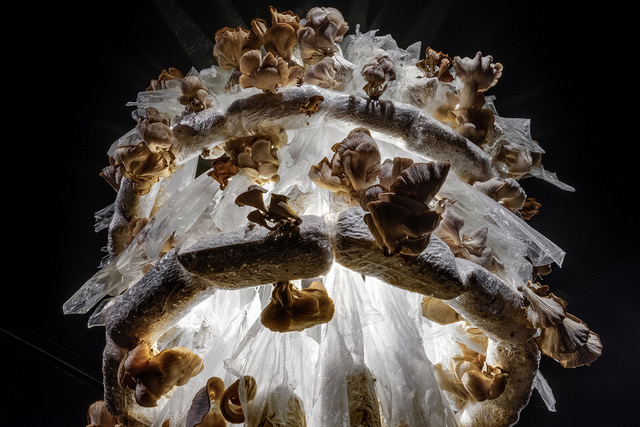
Inspired by an aesthetic in wich art, science, and nature overlap, her multi-disciplinary practice includes drawing, sculpture, installation, photography, and video. By making use of the tools and technical resources of biological research laboratories and learning centres, she embraces organic matter itself as an artistic material, distilling it into a universe imbued with mystery. Her interest for the underground growth networks of mushrooms as interconnected ecological systems has led her to create works that in some ways question, both scientifically and artistically, the sensitivity of non-human life forms and the resilience of nature. |
Meg Nicks, Alberta As a visual artist, the intricate details of nature are captivating. Natureʼs flow and rhythms and the interconnectivity of its patterns and design are subjects for art. The mountain environment is my major focus, an apparently solid, but infinitely changeable environment, where life, tough yet fragile, prospers in a severe world. We must look closely to appreciate all that is here. Flowers, mosses, lichen. The black patterns on aspen trees. Salamanders and seeds. Even the rusting of artifacts left behind. |
T6DH stands for The Six Directions of Healing. An accident provided me an opportunity to explore my inner architecture. I looked to the natural world to aid my healing process. The use of 6 healing modalities, which include diet, complementary, alternative, and integrative approaches to health offered me a second chance at life. In addition to the many surgeries on my arms and hands, I looked to the natural world for alternative remedies in relieving pain. Utilizing natural properties found in the plant and fungi kingdoms, such as turning to a more conscious diet, utilizing teas such as reishi and turkey tail mushrooms, and shifting to a more responsible worldview provided a radical recovery in health and wellbeing. The experience offered me the opportunity to ask how can I be more fully alive, and how can I show gratitude for the offerings of the plant and fungi kingdoms who have aided my recovery? In a recent discussion hosted online by Orion Magazine and Yale School of Forestry: "The Language of Trees: A Conversation with Kathleen Dean Moore and Alison Hawthorne Deming,” I learned all creations share the urge to live. They hold an urgency to protect the plants, animals, and environment which continue to provide us with its generous offerings. Understanding that we are all a part of something much larger than human life is how I find reverence for the natural world at the centerpiece of each work I now create. |
|