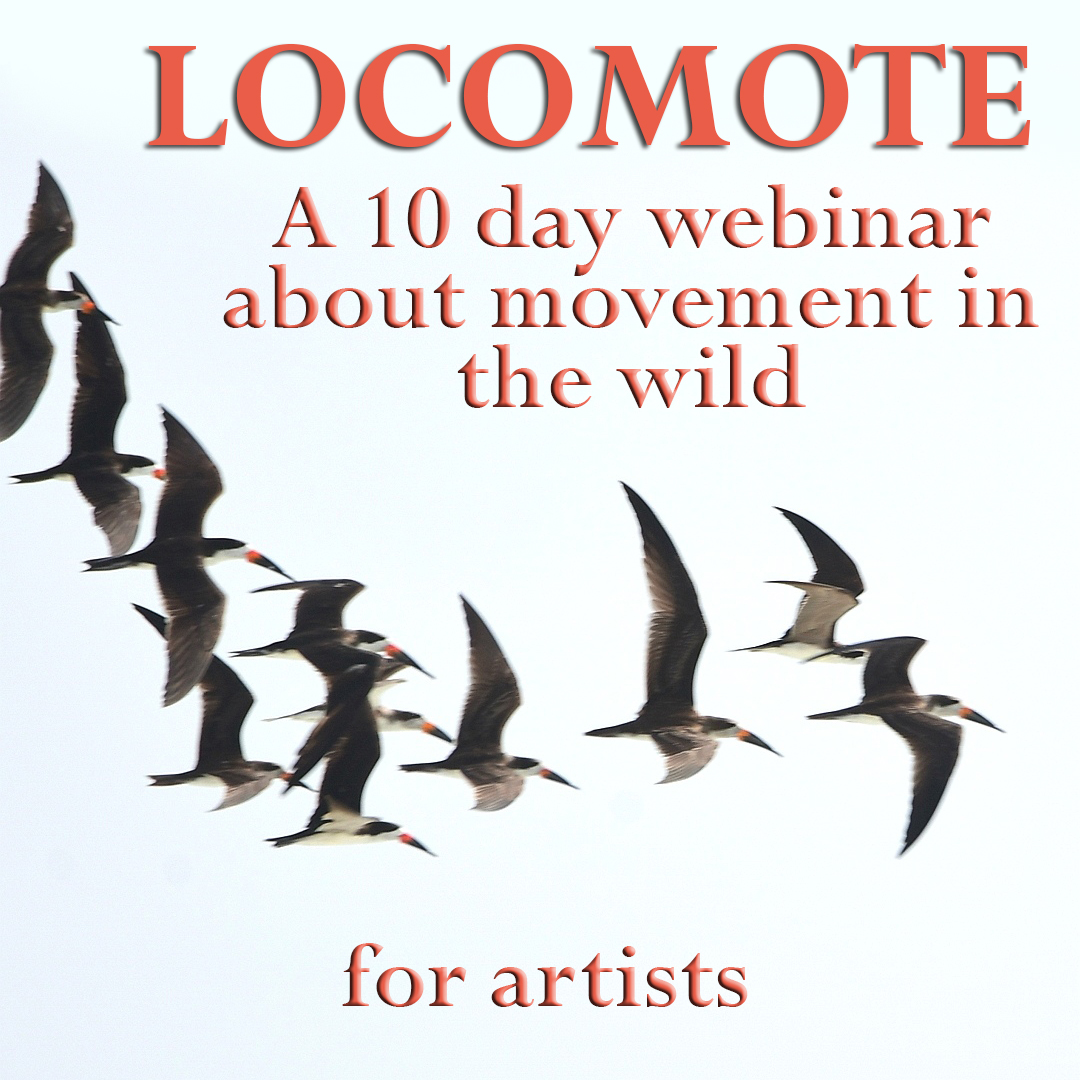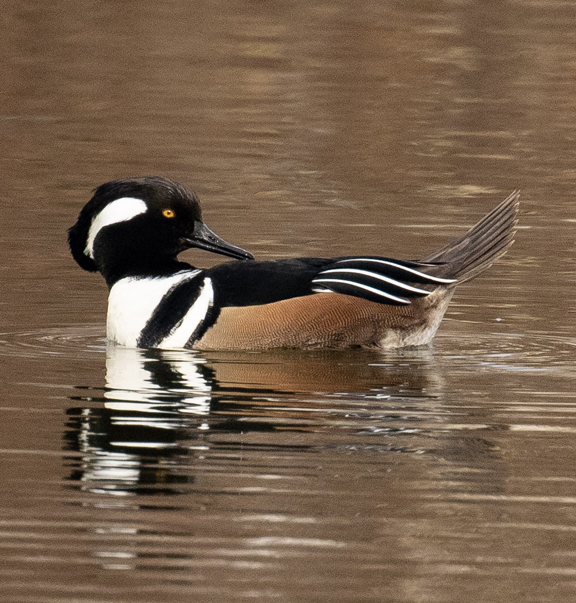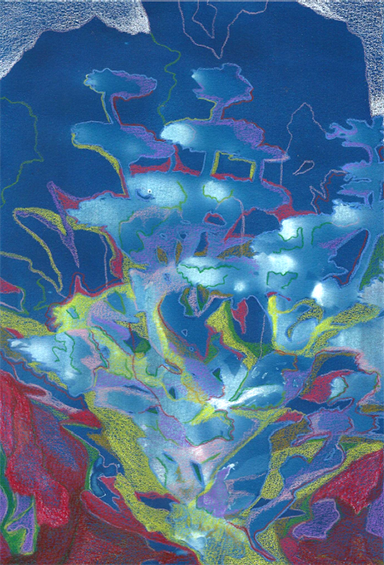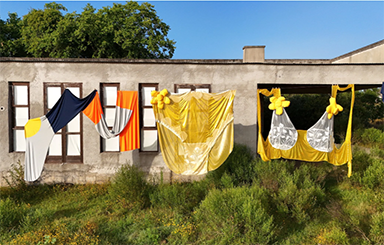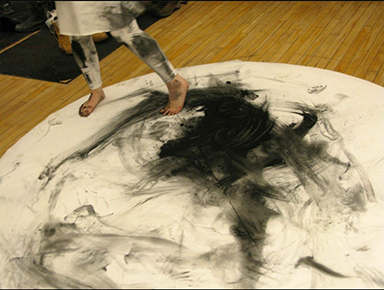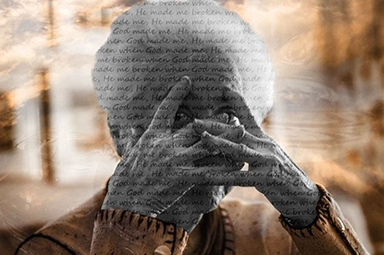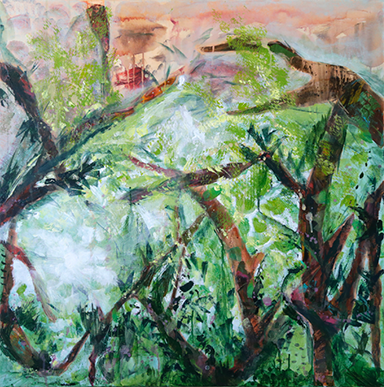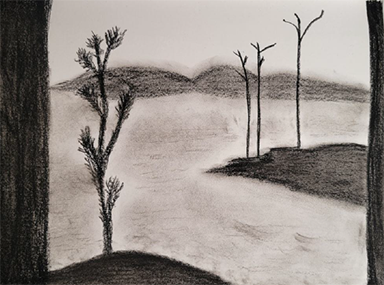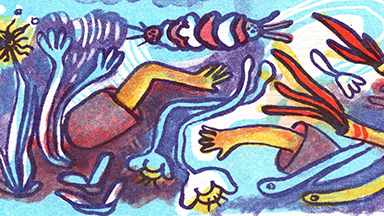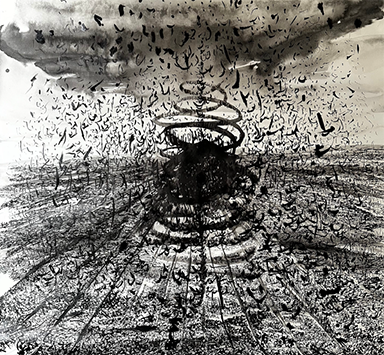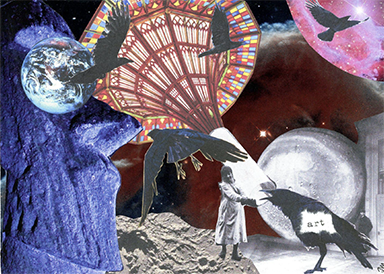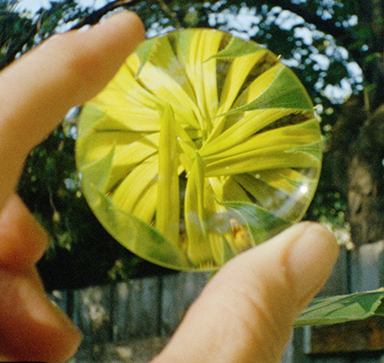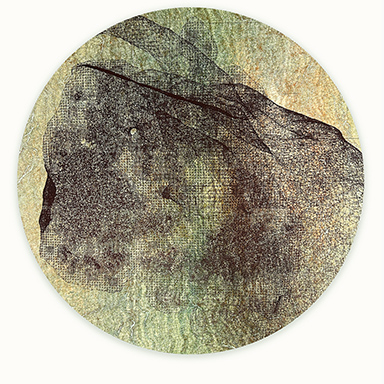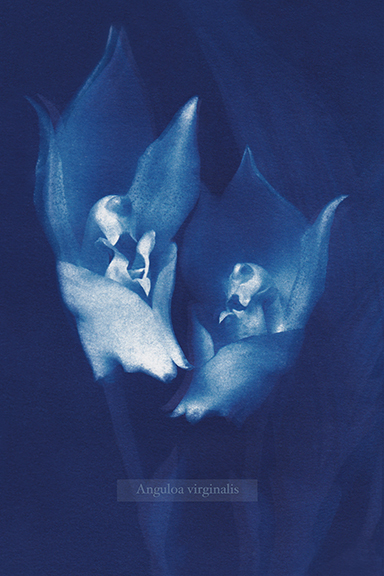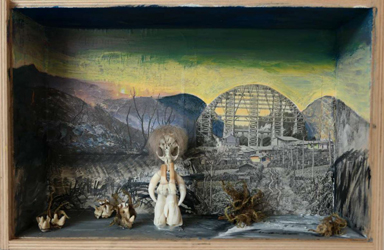
We look forward to learning with the following artists in 2026. Click on images to find out more about them. |
|
My mission in life is to connect people to the outdoors. To foster that connection so that we may protect wild places. It's been the defining purpose in my work as an outdoor leader, teacher, activist, and now, as an artist. While I'm new to art, I am not new to the inspiration, or to the daily pursuit of wild experiences. With respect to photography, I've spent the last year on a serious, daily effort to photograph birds in their natural surroundings. Learning about light, bird behavior, songs, calls, aperture, shutter speed, and my own personal vision has given me a new perspective on the natural world. And now, as my work turns more abstract, I’m focused on capturing the essence of birds and their habitat -- to present something others want to experience. My work is at its best when it contains a mix of the literal, the mysterious, and my wonder, all at the same time. Building this project over the last year has been a life-force for me and my community. Through such a difficult time, we can find connection in the beauty of the wild things in our own backyards. I can't bring the people to wild places, so I bring the wild places to the people. |
My inspirations and artistic process as dance artist are deeply coloured by my naturalist parents: raising butterflies in our bathroom, rehabilitating hawks and owls in our garage, collecting samples of rare wildflower species. I always have an eye on the relationship between humankind and nature. Where does animal instinct meet the poetry of art and science? What can we discover by looking at it through this prism? The birth of my son has motivated me to find deeper roots for my art: how can it move through my community in a way that is visible, positive, engaging and inspiring for anyone? This is manifesting now in ideas clustered around physics, ecology and cosmology. How poetic naturalism (the natural laws and philosophies or stories we tell about them) translates into a visceral moving beast, how dance performance can cause all participants to resist cynicism, to consider and care more. I am so inspired by the gorgeousness of human accomplishments. We are capable of such cleverness and ingenuity, surely we can solve and heal where we’ve damaged and neglected. I want to be part of that process, connecting ideas, sensations, filtering it through dynamic, imaginative bodies to offer some thought-provoking spark. I don’t know if I’m doing that, yet, but I’m trying. After 20 years of making and dancing, there is so much more to learn.
|
For the beauty of the earth. For the beauty of the skies. For the love from which our birth. Over and around us lies. For the beauty of each hour. Of the day and of the night. Hill and vale, tree and fl ower. Sun and moon, and stars of light.
|
Wenhui Lim, Singapore I am Wenhui, a Singaporean artist working as niceaunties. After nineteen years in architecture, I left practice to build the Auntieverse, a speculative, evolving world centred on the figure of the "auntie," a character often comic, underestimated or dismissed, who became my protagonist. What began in 2023 as an exploration of AI tools developed into a sustained inquiry into ageing, gender, domestic labour, cultural identity and environmental consciousness. Through AI-generated video, installation, inflatable structures, silicone sculpture and interactive mirrors, I investigate how the identities of ageing women are shaped by expectation, repetition and care work, and how identity can be both eroded and reclaimed. The auntie's "love language," constant commentary, practical advice, blunt critique, becomes a device to surface internalised self-judgement. I examine beauty not as aspiration but as pressure. What appears humorous often reveals a deeper system of self-surveillance. In 2024, during a residency at Pueblo Garzón Campos in Uruguay, I made Aunties in Dis Place, exploring displacement, migration and the freedom to belong. That work confirmed my desire to ground the Auntieverse in living systems. The questions I already ask, who is allowed beauty, how does care become control, what does it mean to move freely, have deep parallels in the biological world. I want to learn these systems rigorously so they reshape my work, not serve as loose metaphor.
|
Klaire Doyle is a conceptual artist from Northern England whose practice explores lived experience, abjection, and womanhood through interdisciplinary approaches spanning visual art, film, scenography, and performance. |
My work is driven by close observation of movement, navigation, and constraint across materials and living systems. I am interested in how motion becomes legible when it is attended to carefully - through drawing, recording, and simple experimental setups that allow patterns to emerge without forcing interpretation. |
Living on the Canadian prairies has made me keenly aware of the macro and the micro: sky and land, vast and unknowable, minuscule and intimate — all connected and in flux. My explorations in traditional and time-based media follow trails of connections through these beautiful, and terrifying forces. Drawing is my first language and informs my cross-disciplinary work in video, photography, painting, assemblage, performance, and installation. This expressive, embodied way of seeing offers a bridge into a strange, yet familiar world: the ‘self’ and how our minds perceive, distort, and manifest. My investigations into quantum theories, consciousness, and time, have led me to a shift from ‘art as object’ to ‘art as energetic force’. Recently, during a period of healing, I turned inward, back to the roots of my practice: automatic drawing (embodiment, in the moment) and photography (seeing, in the moment) where I hover in the present, unattached to outcome. Biophilium’s Locomotion is an opportunity to venture out of this period of introspection — with all of my tools, with a curiosity about what needs to be done. It is medicine. I am ready.
|
Isabel Winson-Sagan is an interdisciplinary artist, often collaborating with her mother Miriam Sagan. Santa Fe based artists, they combine text & the graphic arts in all of their work. To view their portfolio, please visitl Maternal Mitochondria. On her own, Isabel works in a variety of mediums, including installation, printmaking/book arts, photography, and new media.
|
 Adele Medina O'Dowd, Chevy Chase, MD My ceramics reflect a personal exploration of particles, molecules, organisms, and natural forces, how they interact and emerge in liminal space, and what physics, chemistry, ecology and biology reveals to us about the universe. I am astonished that even while we are immersed within it, the way the universe functions is nearly invisible to our senses and perception. Discussing this with others is mindblowing and joyful. We grasp it better with observation and contemplation—something I do, perhaps excessively. I’d like to live in a universe where scientific conversation is normal and fluent. We can do that. |
My art practice explores overlapping memory, time, belief, nature and imagination — borne of growing up between two cultures, seeking interconnectivity, and finding solace in natural landscapes and materials. I follow art channeling techniques used by both surrealists and spiritualists including meditation, channeling, scrying, and automatic creation as the generative process for my work. My work centers on cornerstones of agency and freedom that instill courage, hope, acceptance, and possibility. |
My work explores the shadowed corners of the human condition, such as fear, grief, isolation, loss, death, and the subconscious mind. I am drawn to what lies beneath the surface when stillness arrives and the discomfort dwells. This is where I find truth, in a space that allows for confrontation and transformation. Through dark elements, I examine themes of mortality, mental fragmentation, and the duality of beauty and horror. I am drawn to environments that feel haunted—haunted by history, absence, or the unknown. My work invites viewers to stop and explore what is often avoided or unseen, and to help recognize that within darkness, there lays complexity but also a light within.
|
|
 August |
Alexis Williams is a spore spreader, silk moth protector and the director of the Biophilium. She specializes in the liminal spaces between forest and field. As an eco art teacher inspired by research biologists and ecologists, she is devoted to directing the attention of her students to the intricacies of ecology through wildlife appreciation in an attempt to develop ways to describe and celebrate the value of life. Her courses shed light on the boundaries between wild and domestic to show that there is none and aim to encourage people to notice their roles in ecology. |
Bedia Ekiz was born in the rich ecological and biological landscape of Çukurova, characterized by its volcanic cones and leached soils. She establishes a deep connection with her personal roots shaped by the mystical historical texture of this region—ancient Anatolia, mythologies, and a nomadic-pastoral lifestyle. The region’s archaeological mounds, ancient stories, bird sanctuaries, and ecological richness form the foundation of her profound explorations into human nature and existential traces. Drawing from her personal witness and the expression of primal pain, Ekiz approaches urban habitats and the rewilding of the “three hills” through a philosophical, psychoanalytic, sociological, ecological, and spiritual perspective. Her artistic practice is centered on examining the existential relationships of human beings and the notion of psychogeography. She documents these experiences through performance videos, sound collages, interactive objects, sketches, and scents. In her studio, she immerses herself in these sources, engaging deeply with their technical and research-based dimensions. Alongside primitive materials such as paper, ink, and charcoal, she adopts a multidisciplinary language that |
I was a scholar before I was an artist, and reading and research is a core part of my artistic practice. My art journey began with documentary filmmaking. This foundation has shaped my current practice in collage–setting images and ideas side by side to provoke new responses. Through layering and juxtaposition, covering and revealing, collage allows visualization of how I wrestle with my own denial and accountability in the human systems that produce large scale suffering. I consider the desert my heartland. I love using the tools of art and art-making for education and community building around complex issues and I believe in the power of these tools to address the urgency of climate change, ecological devastation and ongoing threats to public lands. I was born in Tucson and spent my teenage years there, but I only returned to Arizona to live in 2024. Since returning, I have prioritized belonging to this land, understanding it and taking responsibility for loving and listening to it and protecting it. This has included taking foraging classes, reading about the land, learning about indigenous history and of course hiking. As a white person in a place still shaped by settler-colonialism, I have been studying and thinking about what it might mean to live in solidarity and in kinship with both indigenous communities and the earth.
|
I am a doctoral student at York University researching fungi, science, and visual culture. My interests centre around the knowledge we can gain from fungi. What can fungi teach us about film and media? For my master’s thesis at the University of Toronto I explored the parallels of the precarity and resilience of mushrooms and survivors in post-apocalyptic film. Fungi are the focus of my studies as I am interested in the fact that they represent things that exist in complex systems that humans don’t usually see. I am currently working on media representations of fungi and film specifically with respect to timelapse photography, Uexkull’s Umwelt theory and AI GAN modelling. |
My artwork looks at history, memory and violence through the aperture of the archive: assembled and accidental. I create films, video installation, and 2D, photo-based, mixed-media works. Born in Santiago, Chile in 1967, I came to Canada as a refugee following the 1973 military coup that ousted elected president Salvador Allende. This event – the experience of exile and its reckoning – is integral to my artistic practice. |
My approach to making films is to capture images and sounds as a collector, sifting and arranging them as I try to come to an understanding about my place within a landscape and within a time. I am drawn to boundaries in landscapes: where ‘town’ gives way to the ‘edge of town,’ in thinking: where the line between what is scientific versus informal knowledge, and in filmmaking, along the edges of photographic reality and images that reveal the hand of the maker. I started growing a developer’s garden during the pandemic. These are flowers and herbs that I could harvest and use to create plant-based developers for my 16mm black and white film stock. This led me to begin shooting black and white images of my garden, closely examining these backyard beauties and wondering at their intricate natural designs. Which led to more thinking about domestic flowers, or cultivated backyard varieties and how they mix and mingle across the neighborhood and then how they compare to the wildflowers found in meadows across my part of Montana and beyond. I also started thinking about the time and care it takes to grow plants in our backyard gardens and how it invites me to slow down and tend to them each day, and how there is joy in just taking that time, similar to handmade, processed-based art making—the process of tending and caring becomes the joy as much as any outcome. |
My work investigates the ecological, cultural, and sociopolitical practices that intervene and reshape the form of contemporary landscapes. Subject of both art and the sciences, landscape operates both as mirror and lens, reflecting the spaces we occupy and ourselves within them. Through trace, transposition, and re-interpretation, my work engages in an open-ended Recently I have developed work investigating the sonic and architectural ecologies of both insects and the proverbial “engines” of human enterprise. I am interested in the aural and morphological features of our human noise juxtaposed by the soundscapes of the insect |
 September 2026 |
Catherine Euale is a textile artist, social justice and environmental activist, costume designer and storyteller. In her practice, she challenges the need to use materials and methods that are noncompatible with living systems. She believes deepening and shifting our relationships with the material can raise awareness of our forgotten relationships within more than human worlds, planting seeds for a “good Anthropocene”. Designing systems for interspecies worlds can ignite tremendous political, social, and philosophical implications that we must consider for a resilient and harmonious future. |
I am a Bolivian-Canadian visual artist whose practice integrates nature exploration, botanical research, and the creation of deep connections between people and the natural world.
|
I am interested in what we consider holy and how we signal that it is. Starting in 2023 with the exhibition Membranes, I have worked intensely with the biological and mathematical building blocks of life, my theory being that these are what we will consider holy in future religious practices, when the patriarchal, Abrahamitic religions have been supplanted.
|
“Renée Magañas oeuvre resembles a virtual cemetery. But a cemetery that one visits with pleasure. Death and transience are indeed woven into all her art. Her work is colorful and cheerful, combining the child's casual curiosity with the adult's experience of loss, sensitive remembrance with subtle cheerfulness.” As a half-Mexican living in Switzerland for several decades, my artistic work deals with the different ideas and significances of death in different cultures. In Mexico, death is not a taboo, but often the subject of an ironic debate that is reflected in the light-hearted representation and form of skeletons, among other things. Death has a high value in various Mexican traditions. My artistic practice does not distinguish between my daily life and my artistic interests. I am inspired by memories, triggered by different incidents: a smell, a photograph, an environment, a sound, the light, a film. I have been collecting, researching and preserving things dead or relating to death – as an artist and as a private person – for several decades. I collect the overlooked, the left behind, the lost or forgotten. It is a fascination for discovery in the old and the used and how I can transform them in order to present hidden stories they might have to tell. |
Alumni
We have had the absolute pleasure of learning with hundreds of amazing artists over the years. You can find them here. Click on a topic to see all of the Biophilium and Ayatana artists who have been research fellows and artists in residence with us since 2014.
|
|